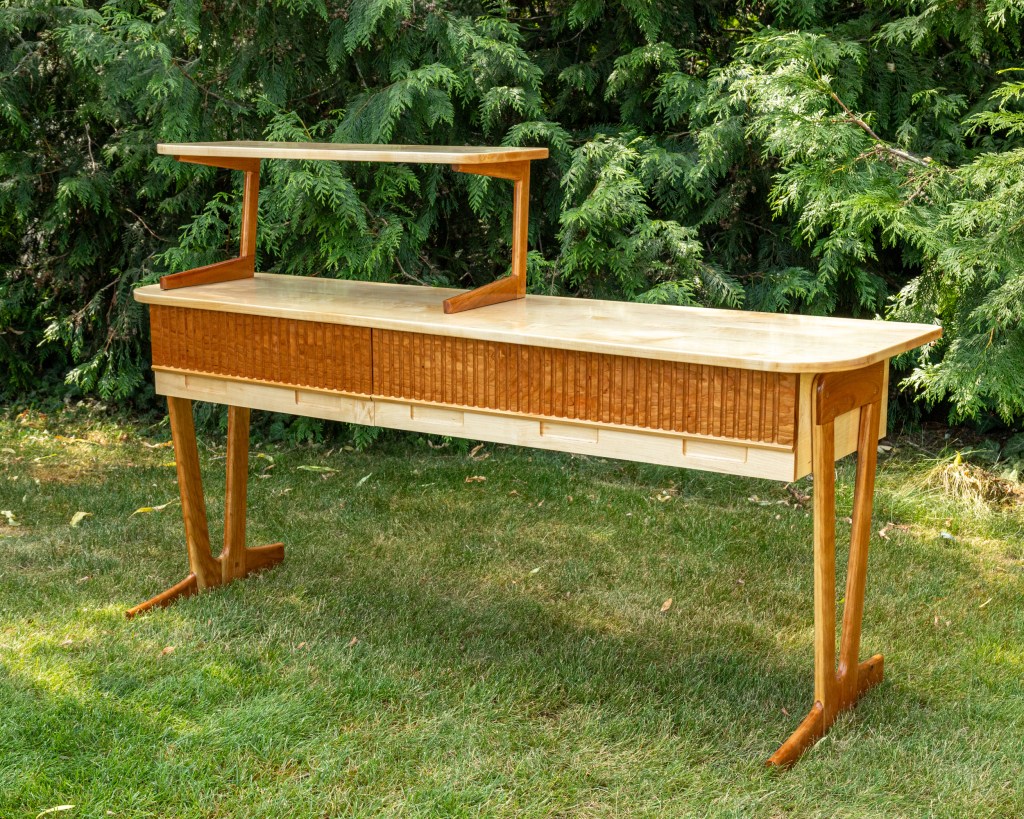
For the past five or so years, I have used a simple L shaped desk given to me by a friend. It has served me well, but in using it for five years with a variety of different hobbies, I came to understand its limitations very well. As a graduation gift to myself, I created the Sequencer Desk. I spent months progressing through the design work as a side exploration to my schoolwork, which enabled thoughtful consideration of the activities occurring at the workplace and also of the objects on or adjacent the desk. The desk has two primary functions: to facilitate musical exploration and creation, and to act as an interface for my desktop computer, at which I do digital art, play games, and manage this website (among other things).
General information about the design itself is below. I will make a follow up post focusing on the details and construction of the desk at a later date.

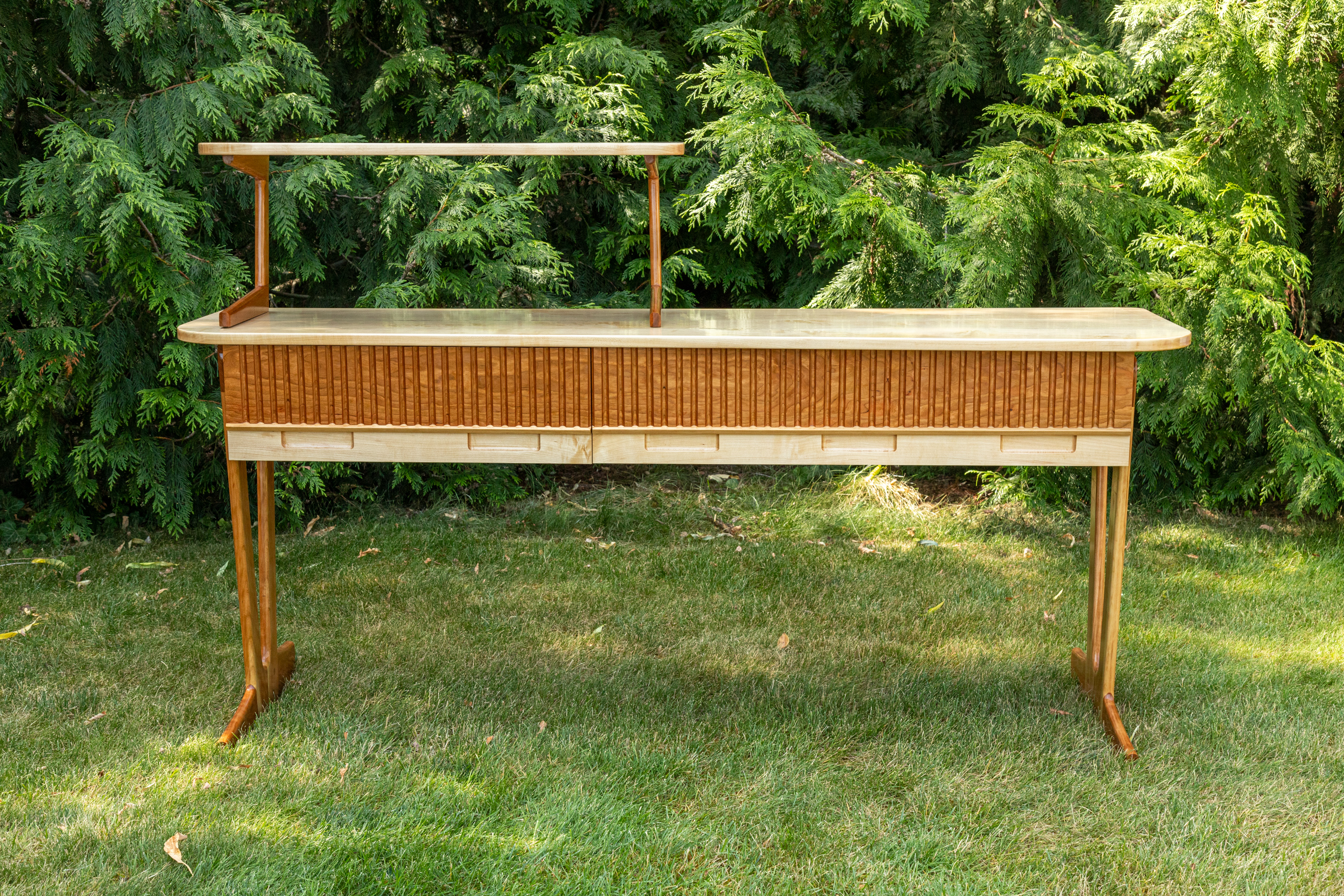
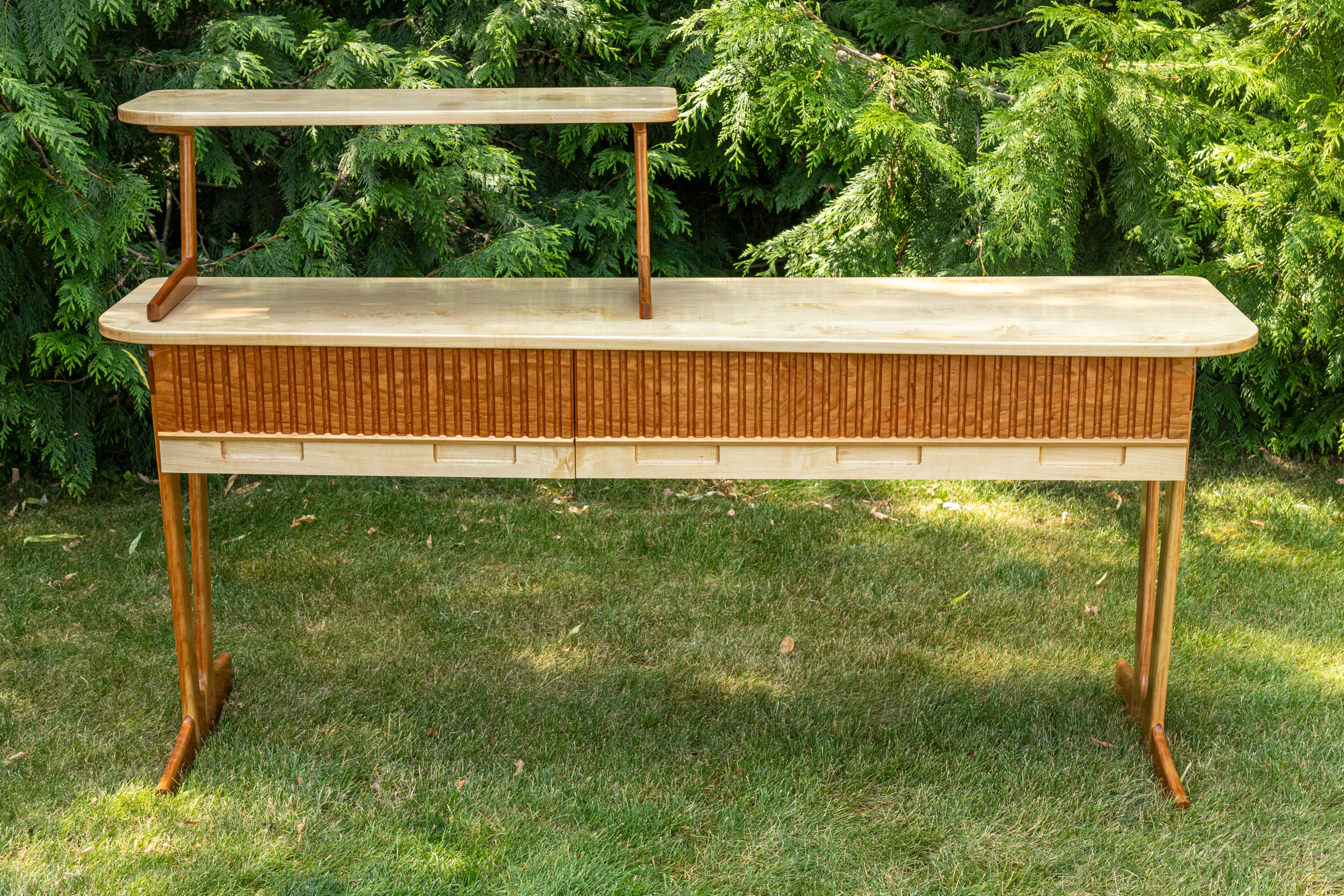
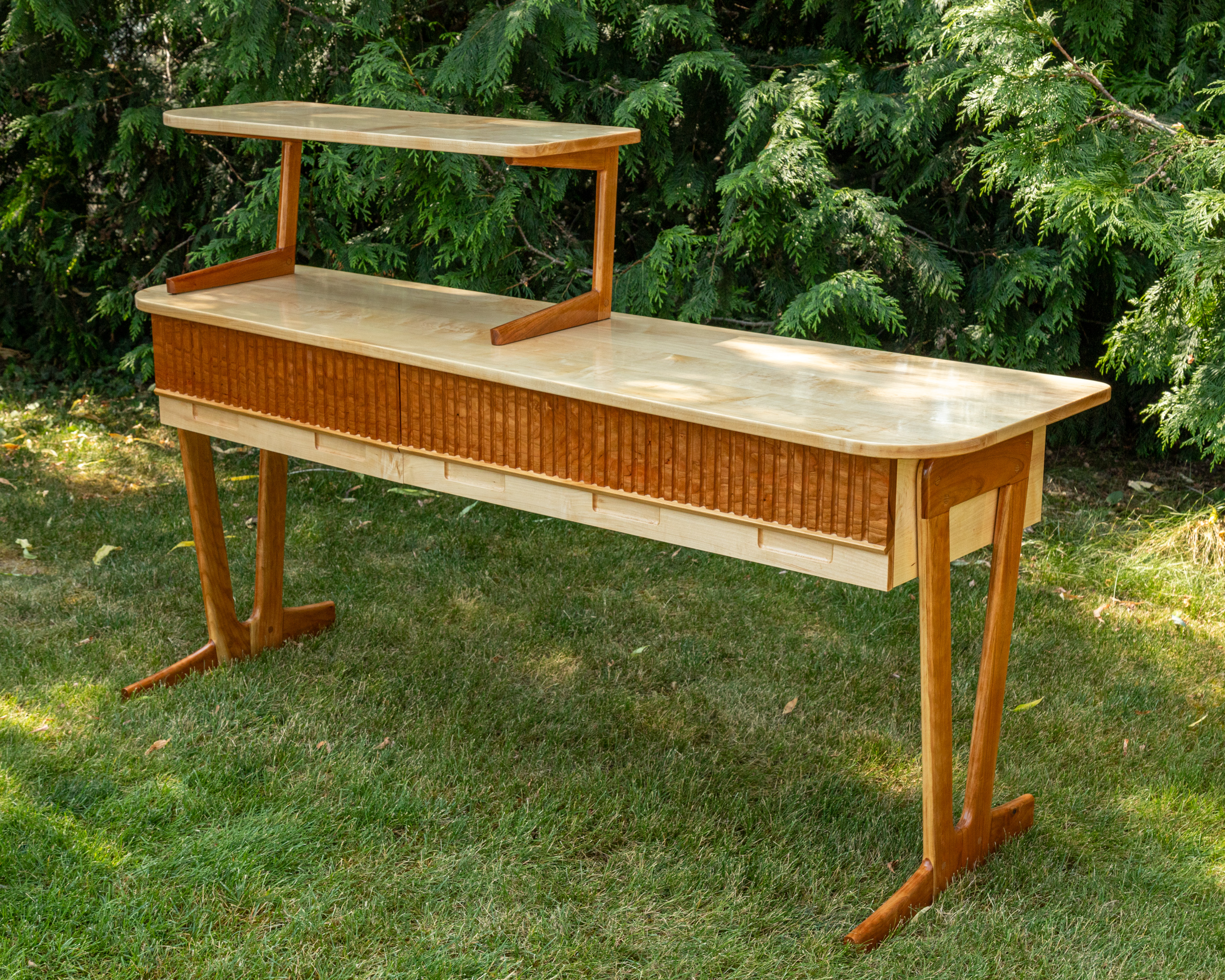
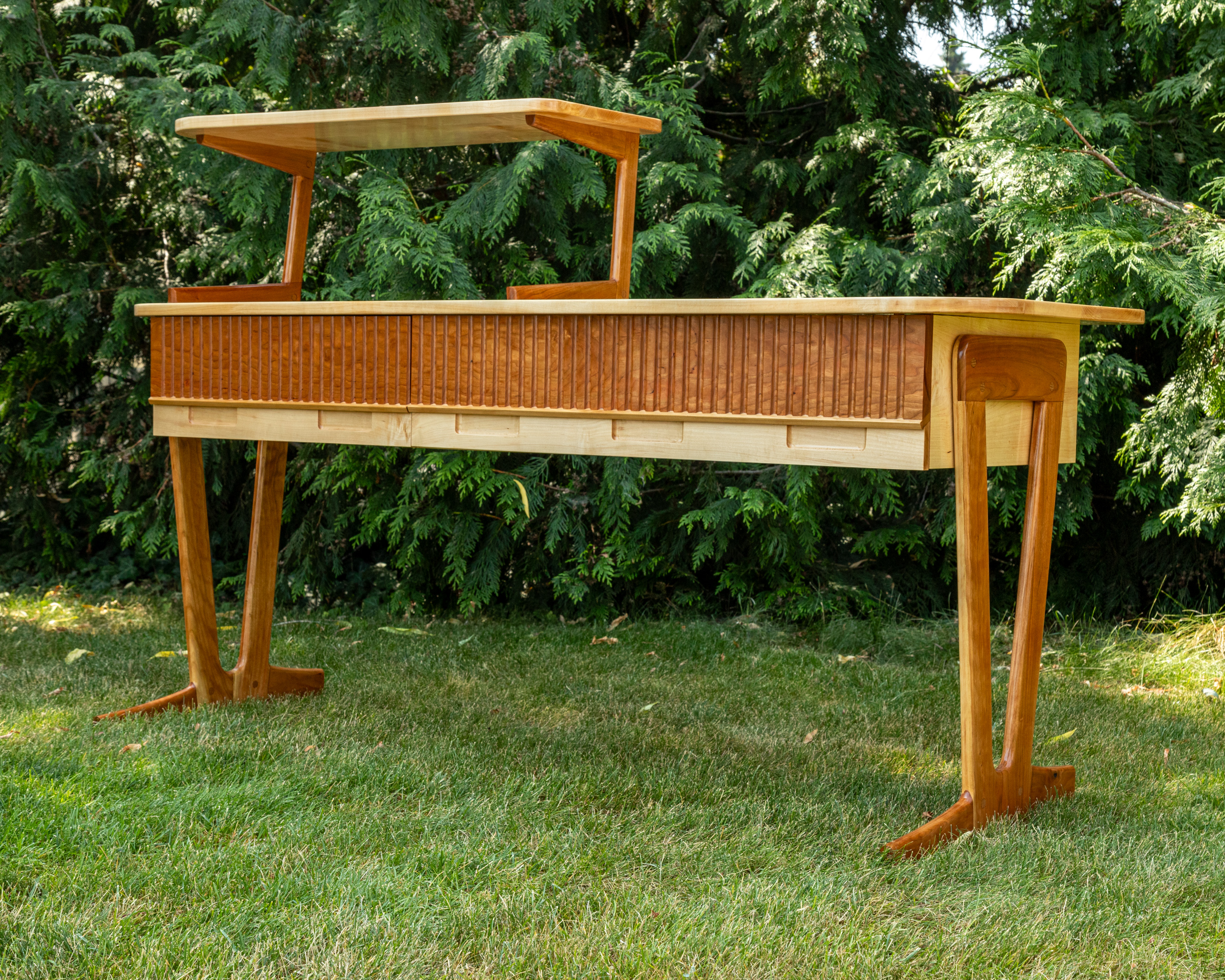
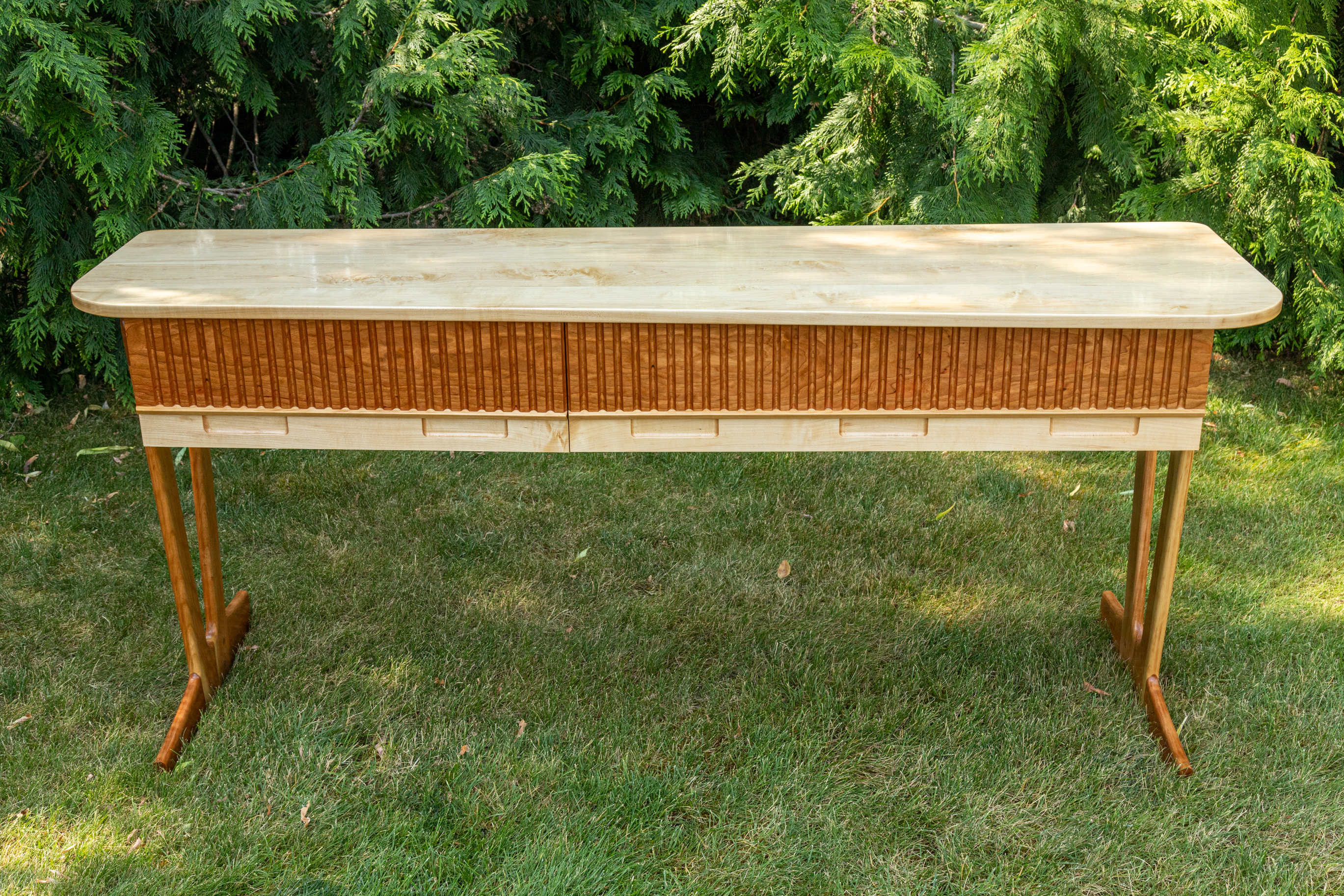
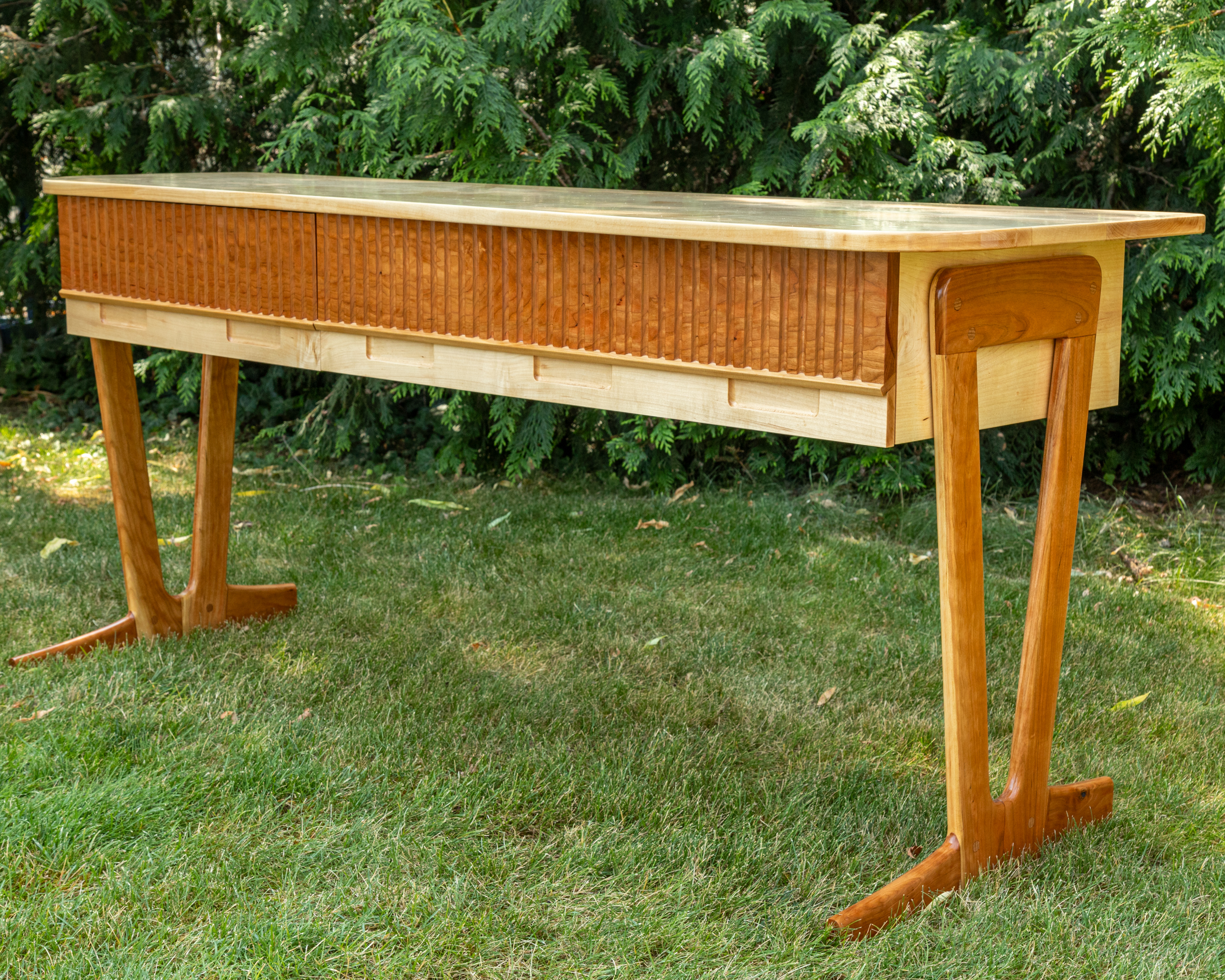
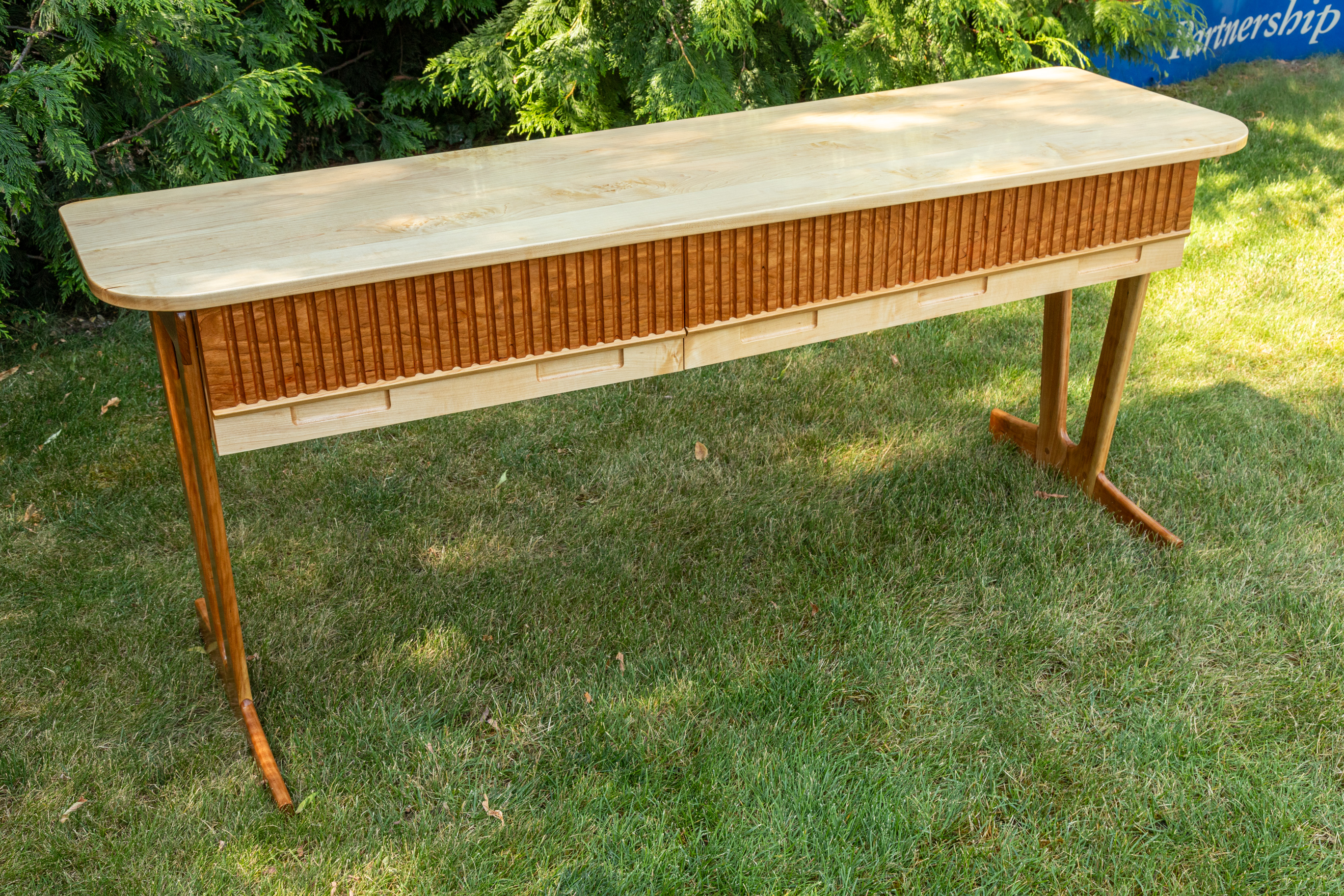
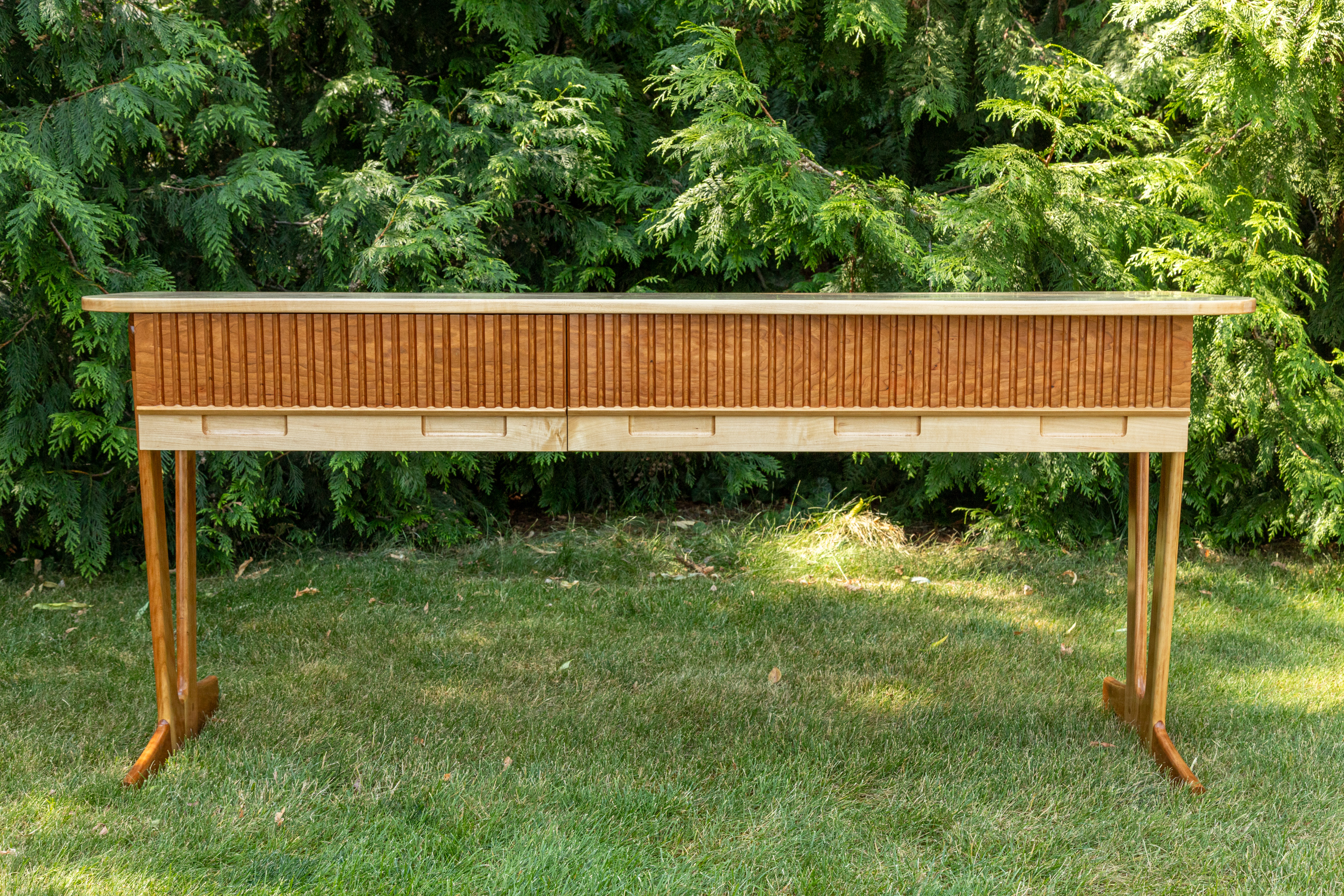
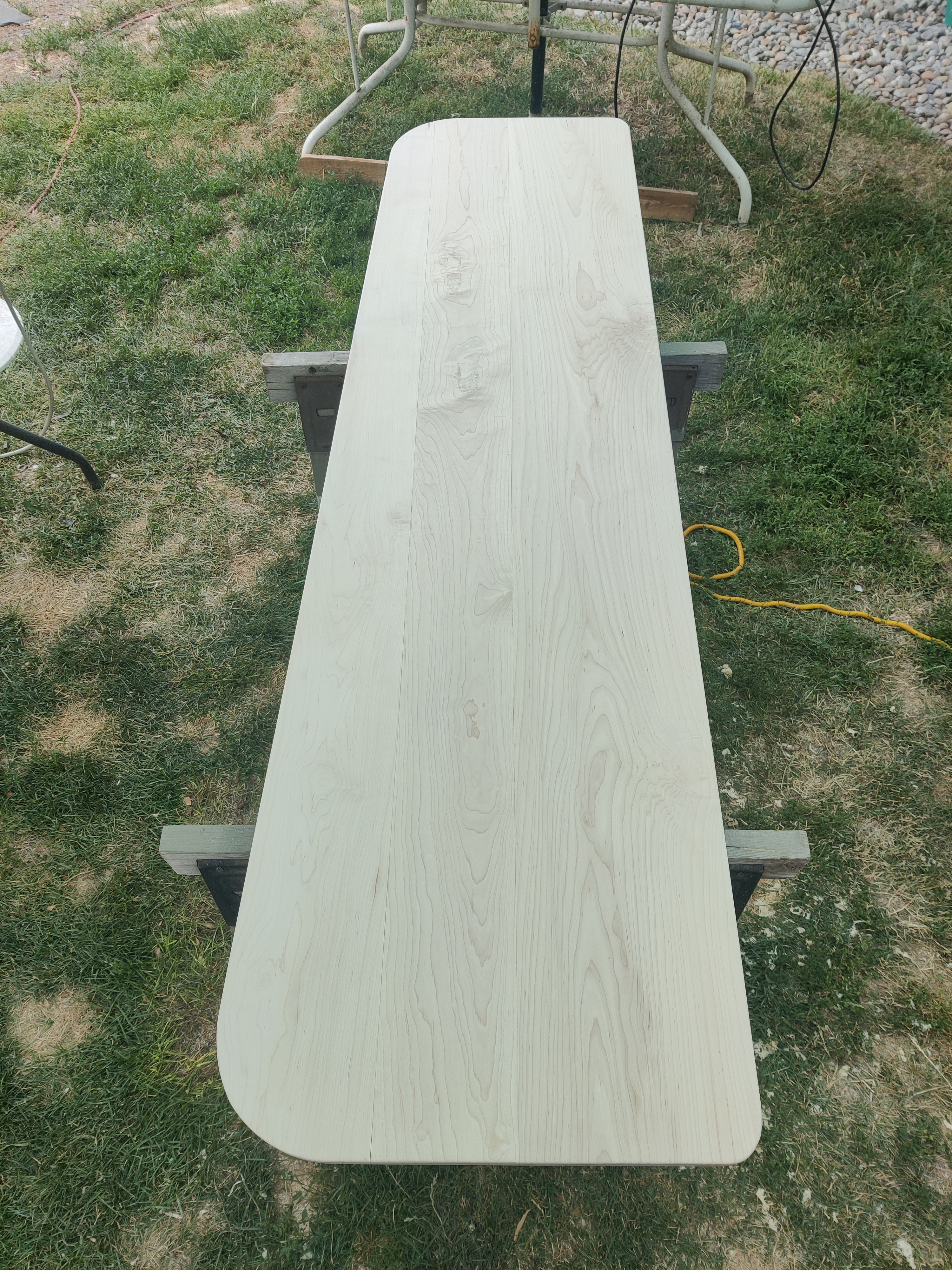
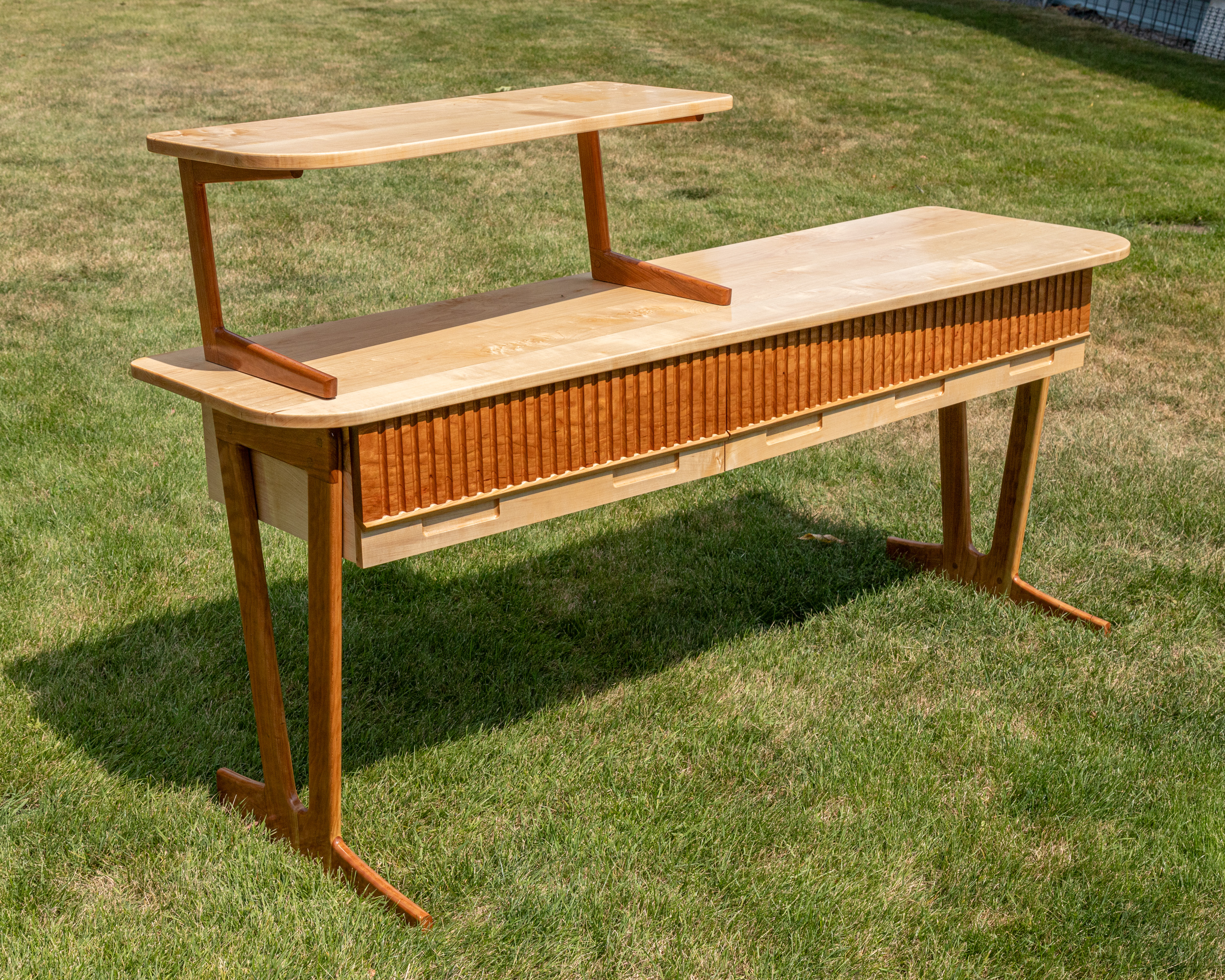
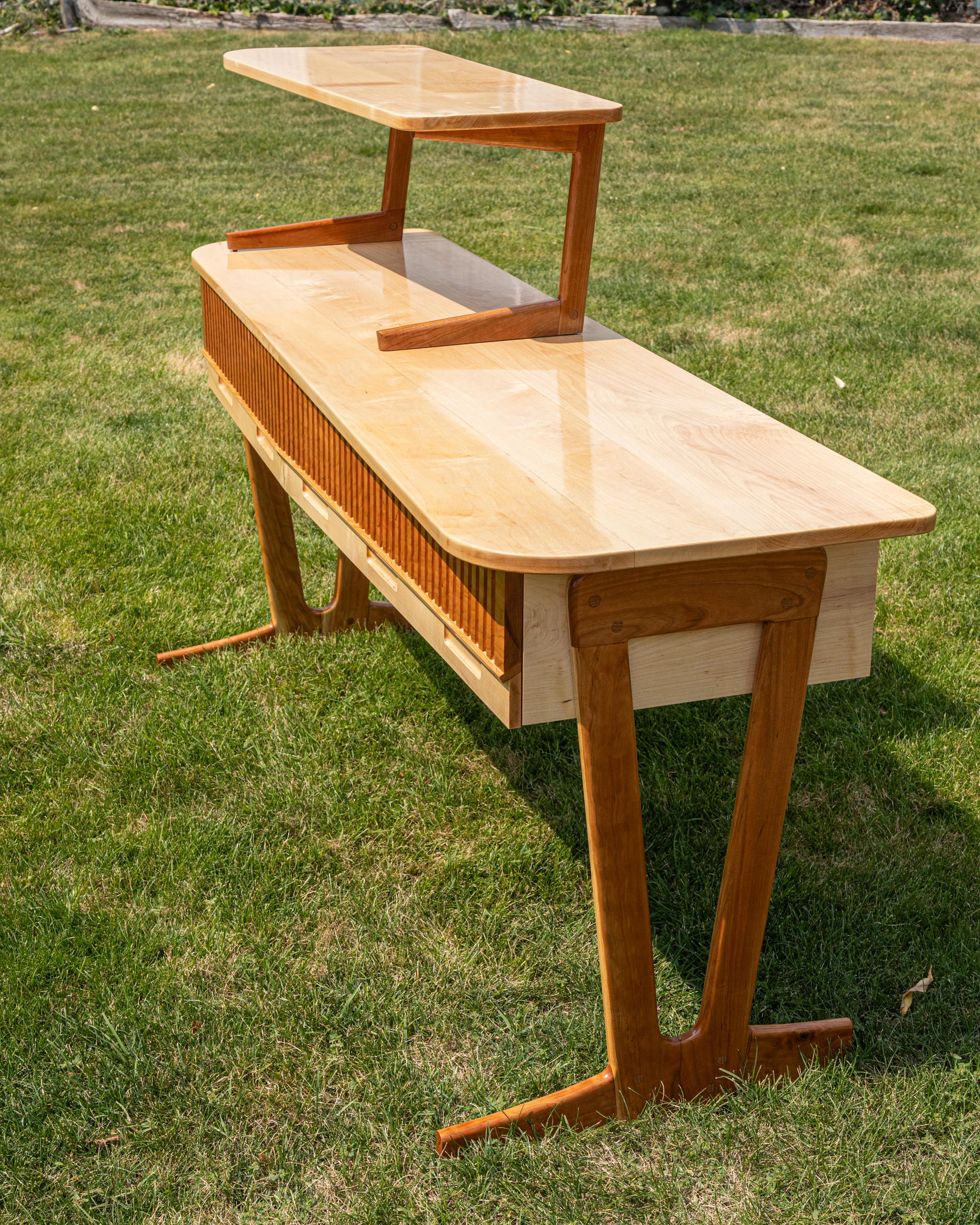
The design responds to its placement on the entry wall of the room with a simple tapering of the top. The width is lesser near the door and greater towards the far wall, making it easier to enter to room and not feel constrained while also providing the necessary depth for a monitor, keyboard, and mouse. The slide out keyboard also requires more depth than the other instruments and functions, so it made sense to locate these components on the right side, where the depth was greatest. The skinnier left side comfortably houses two synthesizers, fx pedals, and a drawer for all of my other cables and equipment. As shown in the previous photographs, the upper shelf is not physically attached, giving the desk more configurability for other uses in the future.
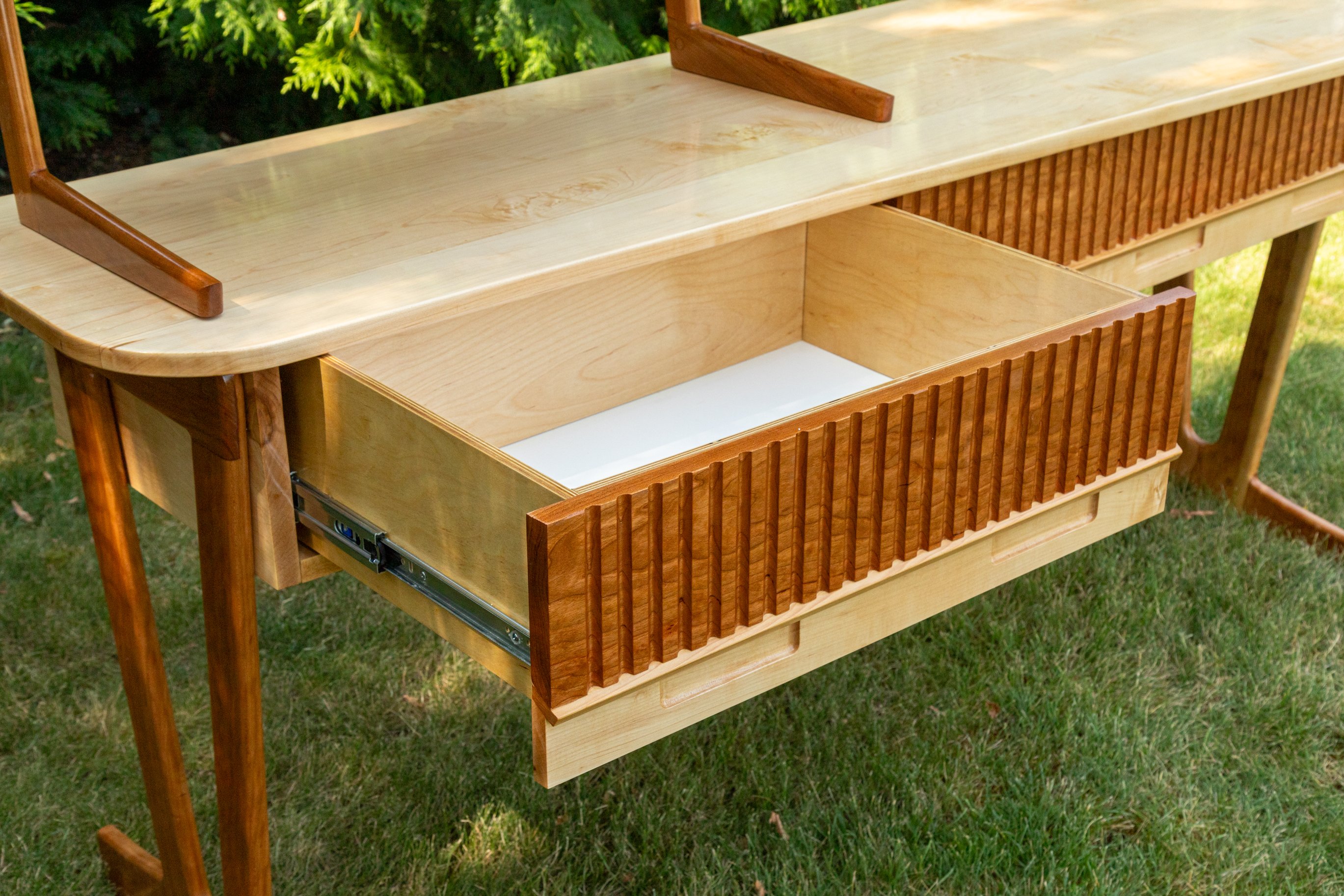
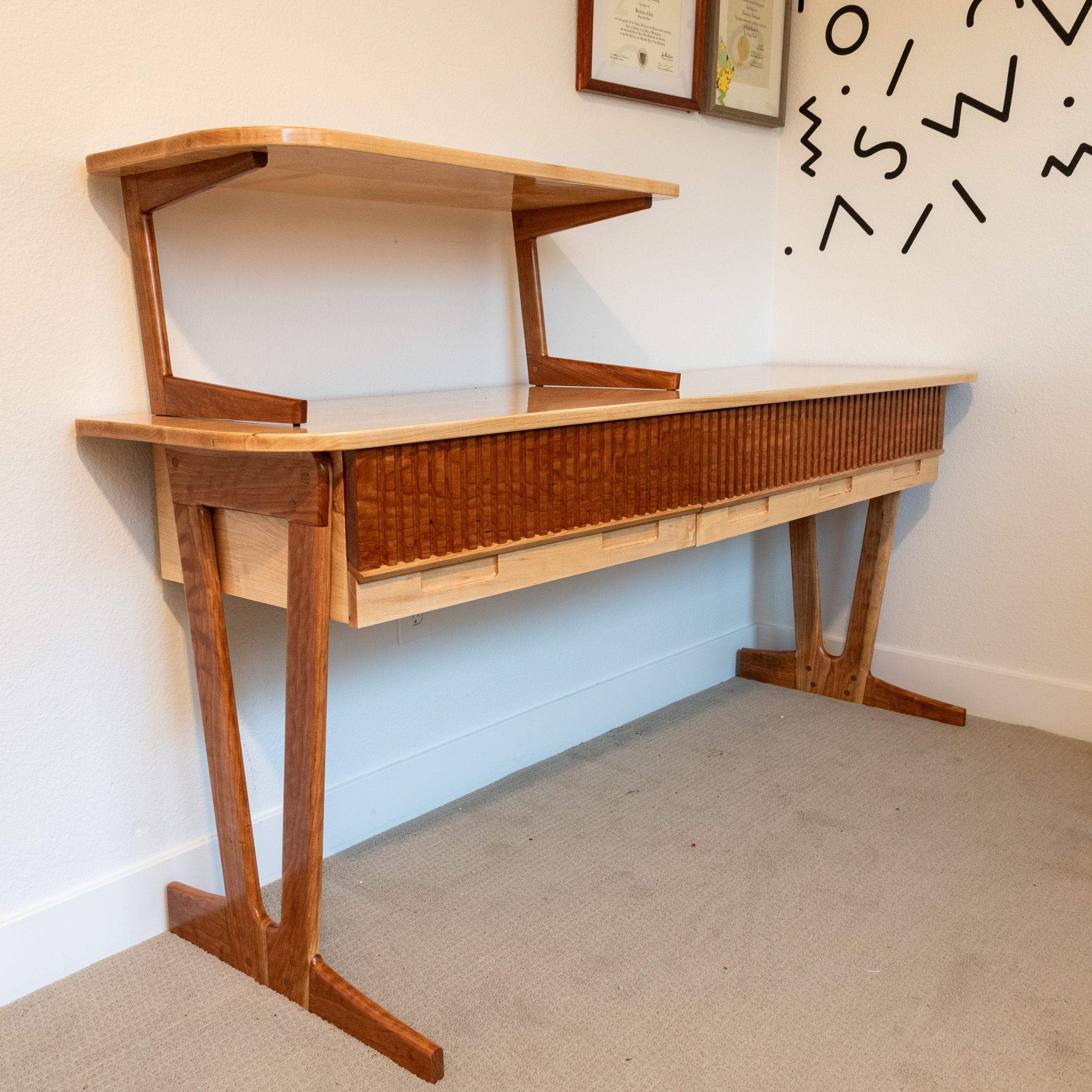

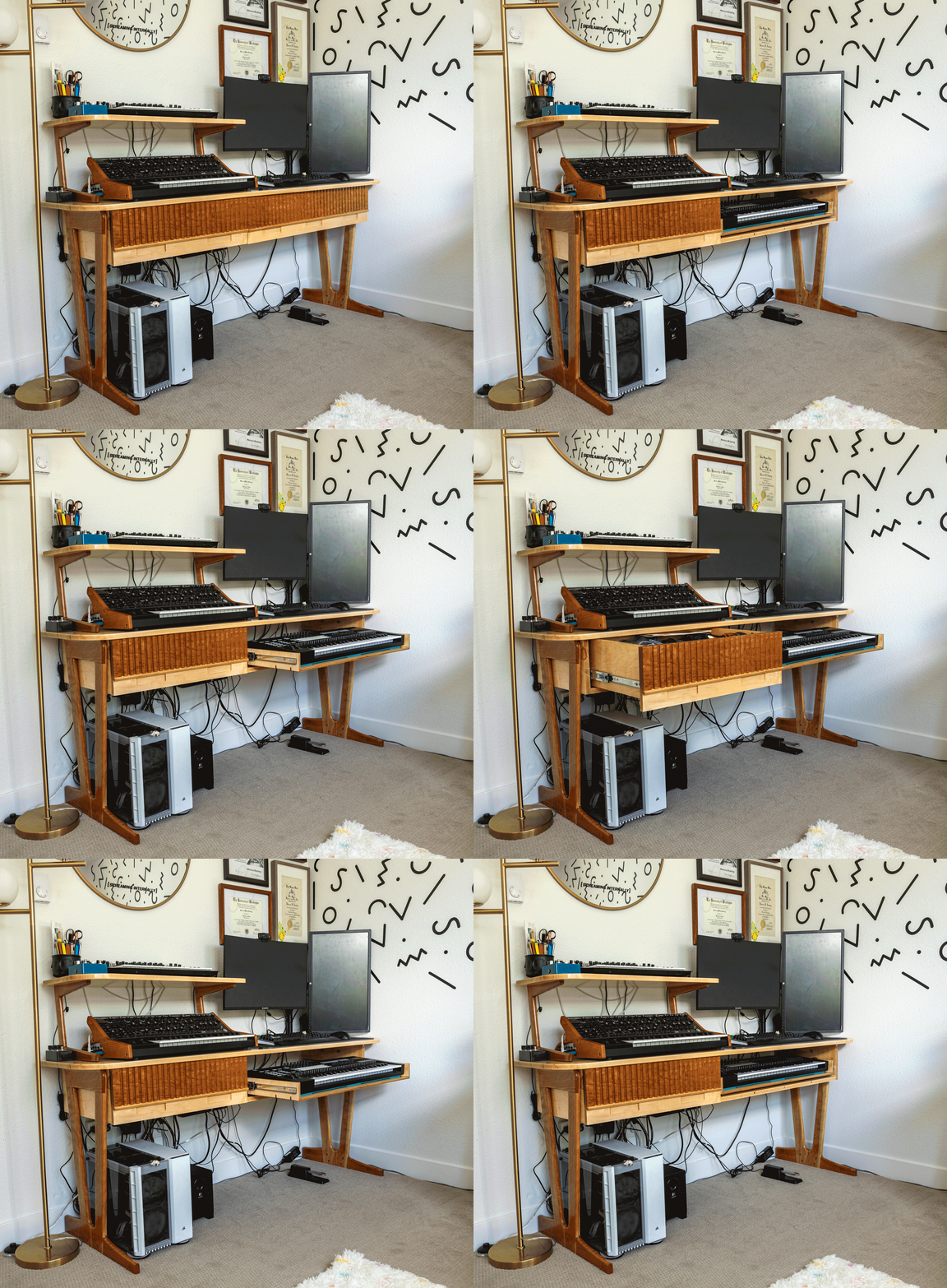
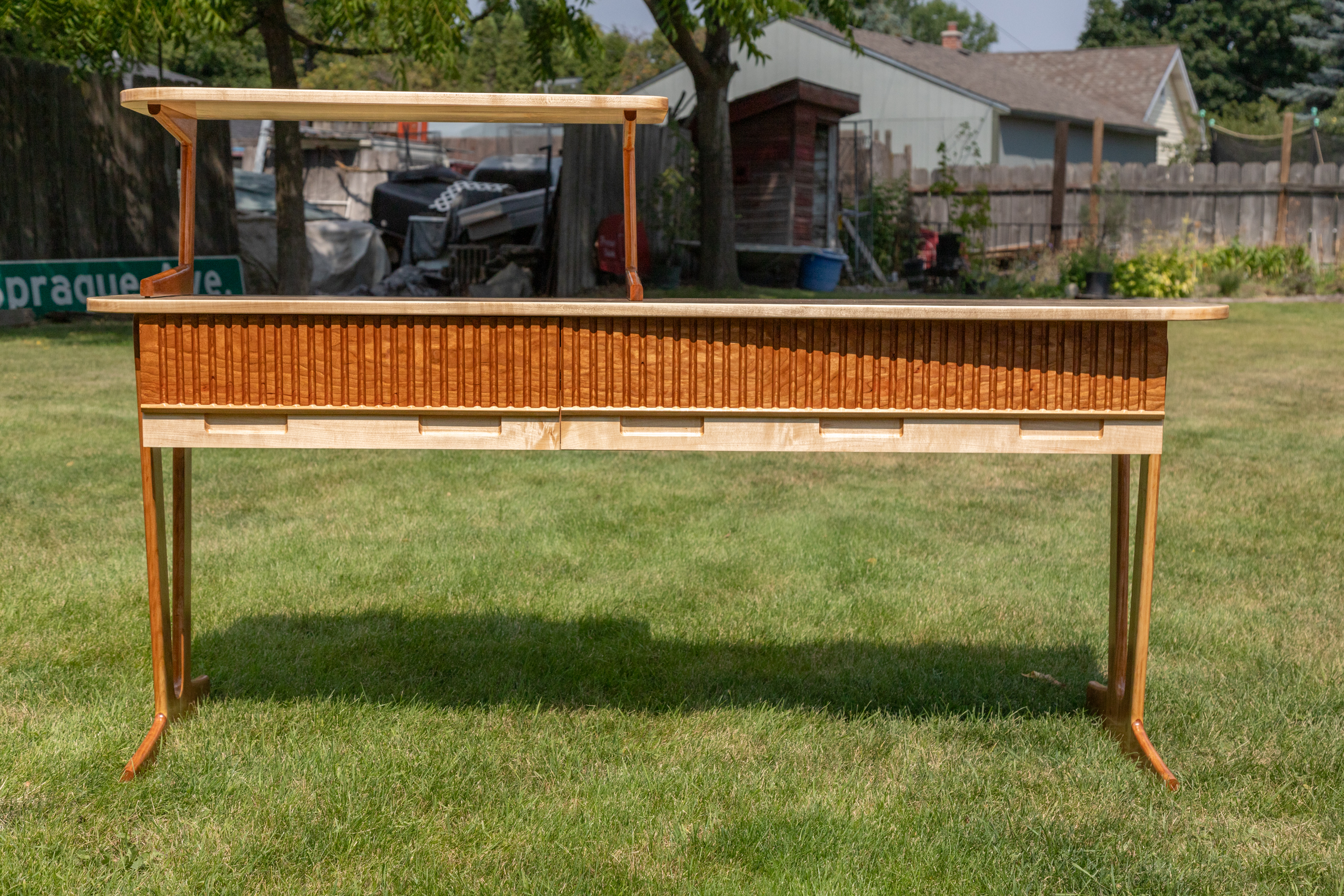
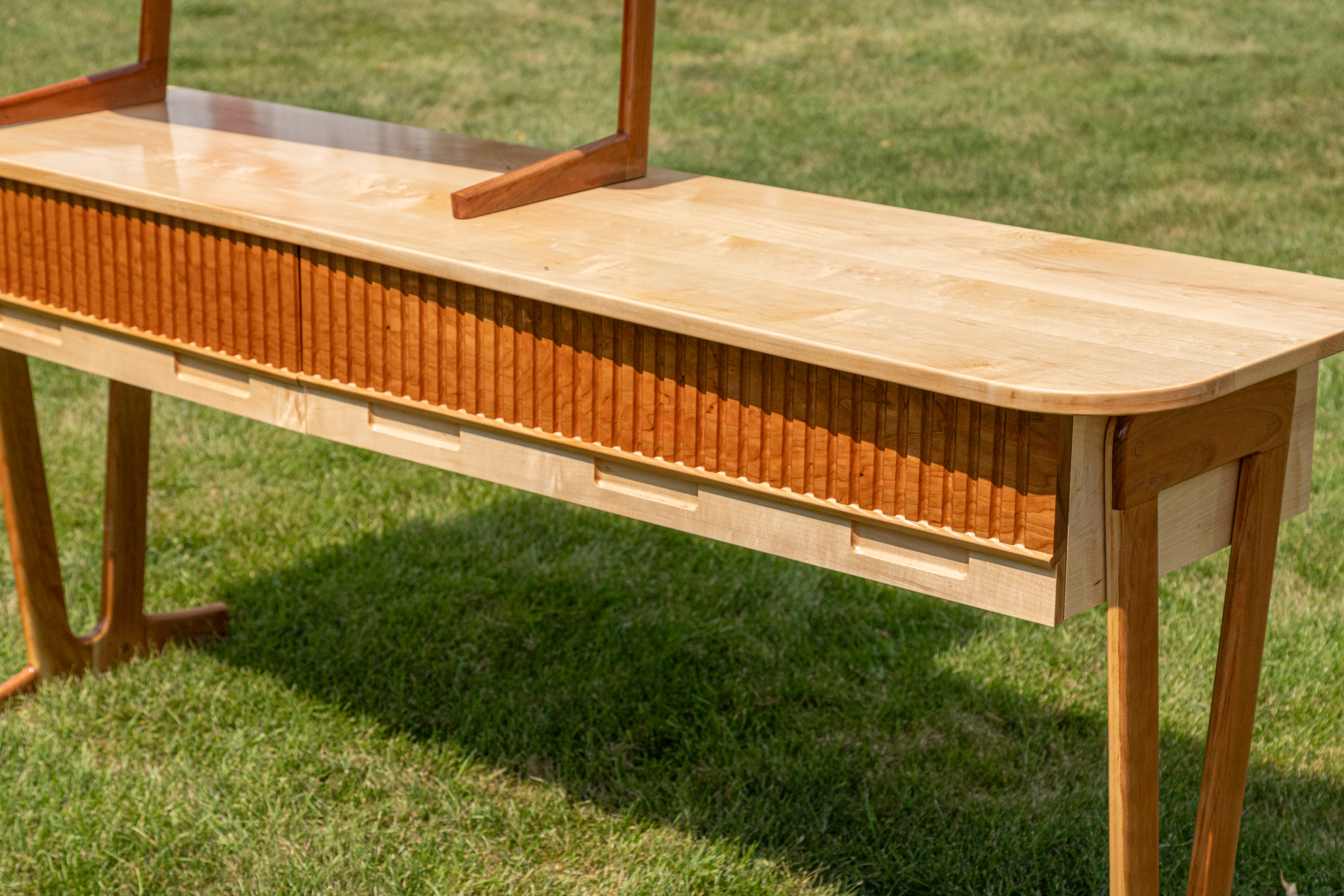
The project is predominantly cherry and maple, with the former being the primary vertical structural elements and the latter the horizontal and sheer structure. Some plywood is used in the drawer box and the sliding tray. This selection is meant to harmonize with the existing furniture pieces in cherry and Baltic birch in my residence while balancing the economic side of the project. The front panels were carefully detailed, with the division between the detachable portion and the drawer face located in the valley of the fluting. Recesses routed into the maple strip at the bottom create deeper areas for handpulls. The fluting creates more complex shadows along the face of the desk, adding intrigue. The rhythm of the fluting and the handpulls, in concert with its music-focused use, inspired the name Sequencer Desk as a reference to quantified musical patterns.

 BRAN.D - Branting design
Leave a comment